Abstract
The topic of apportionment is a central focus of study for legislatures around the world, whether the goal is to allocate seats to political parties, or to allocate seats to the member states of a federation. The first goal is sought by parliaments employing proportional representation for parties; the second goal is sought by the United States House of Representatives and the European Parliament. Many of the leading apportionment methods were created in the late 18th century in response to requirements listed in the United States Constitution. No apportionment method perfectly satisfies all desirable properties, particularly the properties of integrality, proportionality, and quota. The Largest Remainder method satisfies quota but suffers from other paradoxes; the divisor methods like the Greatest Divisors, Major Fractions (Arithmetic Mean), Equal Proportions (Geometric Mean), Harmonic Mean, and Smallest Divisor methods satisfy proportionality but may fail quota. Some apportionment methods like Greatest Divisor unfairly favor larger parties and states, and others like Smallest Divisor unfairly favor smaller parties and states. We introduce a new method for Congressional apportionment that creates the apportionment all at once, rather than determining seats one at a time. This method always satisfies quota. It partially resembles the familiar Huntington monotone divisor methods and indeed creates a quota-capped divisor method, but can be compared as well to largest remainder methods.
Keywords
Apportionment, Divisor, Largest Remainder, Proportional Representation, Quota
1. Background
Having addressed single-winner election methods with my colleague Peter Mendenhall in
, we now turn to the equally daunting topic of apportionment.
The constitutionally required task of apportionment for the United States House of Representatives, and the debate over its implementation, have their roots in the Constitutional Convention and the early years of the American Republic. The debate has persisted to this day, due to vexatious conflicts between desirable features of apportionment methods. These conflicts arise because of the difficulty of reconciling the following goals:
1. (integrality) the number of representatives of each state must be a natural number;
2. (proportionality) the numbers of representatives of the several states must be as proportional as possible to their populations;
3. (quota) the numbers of representatives of the several states differ by less than one unit from the fractional numbers of representatives the respective states have earned in the House.
Proportionality implies that if, for example, state A has twice the population of state B, then state A should have approximately twice as many representatives as state B; and similarly for any other ratio. Proportionality is implicit in the language of the Constitution
.
1. Article One, Section 2 holds: “Representatives and direct Taxes shall be apportioned among the several States which may be included within this Union, according to their respective Numbers…”
2. The Fourteenth Amendment, Section 2 holds: “Representatives shall be apportioned among the several States according to their respective numbers…”
Quota implies that if, for example, state A has earned 17.06 representatives out of 435, then state A should be awarded either 17 (lower quota) or 18 (upper quota) representatives, no more and no less.
Other conditions have been proposed for apportionment methods, such as:
1. (House monotonicity) if the House size increases, the number of representatives of any state must not decrease; similarly, if the House size decreases, the number of representatives of any state must not increase;
2. (consistency) the order of priority of assigning representatives does not change as they are being assigned.
The concern over monotonicity arose in an era in which the size of the House varied from one apportionment to the next. However, since 1913 the size of the House has remained largely constant at 435, by the Apportionment Act of 1911 and the Reapportionment Act of 1929, with a temporary excursion from 1959-1962 due to the admission of Alaska and Hawaii to the Union. Consequently, monotonicity does not represent as high a priority today as the more fundamental requirements of proportionality and quota.
Arguably the most natural apportionment methods are the largest remainder methods, such as Hamilton’s method (also attributed to Vinton, Hare, and Niemeyer), all of which satisfy quota. The failure of Hamilton’s method to satisfy House monotonicity led to an intensive study of divisor methods, also known as highest average methods, some of which had been proposed by Jefferson (also attributed to d’Hondt), Adams, Dean, Webster (also attributed to Wilcox and Sainte-Laguë), Hill, and Huntington. The divisor methods, as implemented, were House monotone, but could violate quota. This includes even the currently used Huntington-Hill Equal Proportions method, arguably the most proportional of all divisor methods. Balinski and Young
| [3] | Balinski, Michel L., and Young, H. Peyton, Fair Representation: Meeting the Ideal of One Man, One Vote. Yale University Press, 1982. |
[3]
provide an overview of apportionment methods.
Hill’s original proposal to Huntington appears designed to strike a balance between proportionality and quota, the two most important properties of apportionment. Huntington’s revision
of Hill’s suggestion was designed to prevent a violation of monotonicity, at the expense of risking a violation of quota. Huntington went into greater depth analyzing and comparing the divisor methods in
.
Balinski and Young
| [7] | Balinski, Michel L., and Young, H. Peyton, A New Method for Congressional Apportionment. Proc. Natl. Acad. Sci. U.S.A., 71 (1974) pp. 4602-4606.
https://www.jstor.org/stable/64248 |
[7]
proposed an apportionment method that satisfies quota and monotonicity, but is excessively favorable to the largest states. Mayberry
responded to Balinski and Young with a mirror of their apportionment method, a new method also satisfying quota and monotonicity, but which is excessively favorable to the smallest states.
The goal of the present paper is to present an apportionment method satisfying quota that is neutral between large and small states, and is proportional as possible. We note that this discussion is applicable as well to the study of proportional representation of parties in multi-winner constituencies.
2. Notation and Quota
We rely largely on Mayberry’s notation. The states, with populations , are to be assigned representatives in a legislature with seats (where we call the house size), in the amounts , satisfying minimum and maximum constraints. In most practical cases, both vectors and are constant. Unless otherwise stated, all sums will be over indices satisfying .
For all , we have and , with , , , and all whole numbers, while . In the case of House apportionment, where each state must receive at least one representative, we have and for all , while in the case of proportional representation, we have and for all .
We define the total population , , and . Thus .
We define the exact quota for the -th state to be . Thus , and . In general, is not a whole number. It is a fraction that represents the exact share of the legislature earned by a state in proportion to its fraction of the national population. We expect to be reasonably close to for all .
The quota requirement may be stated formally as follows: , where , the floor, is the greatest whole number not exceeding , and , the ceiling, is the least whole number not less than . The first component of the compound inequality is lower quota, and the final component of the inequality is upper quota.
In other words, when satisfying quota, as we calculate , the number of representatives for the -th state, we wish to do no more than round up or down to the closest whole number, while meeting the minimum and maximum requirements. Symbolically, for all . For a method that satisfies quota, the only remaining question is whether to round up or to round down, for each value of .
Note that for our compound inequality to have solutions, it is necessary that for all , and . The first of these conditions is particularly important. It implies that if , a common condition in proportional representation, those parties with will not be represented. Similarly, if , as required by the United States Constitution, those states with will be awarded exactly one representative.
Let
. Provided that for all
,
and
, Hamilton’s method provides the solution to the following problem: determine the apportionment vector
with whole number coordinates and sum equal to
that minimizes the Euclidean distance to vector
. Indeed, as Birkhoff observed
, Hamilton’s method minimizes not only the Euclidean distance between
and
; it minimizes the Minkowski
p-norm metric distance between
and
for all
. (Lang
| [10] | Lang, Serge, Real and Functional Analysis. Springer, 1993. |
[10]
provides an in-depth introduction to Banach spaces, generalizing the familiar Euclidean spaces.) To put it another way, Hamilton’s method finds an apportionment that changes exact quotas by the smallest amount. This is a strong argument in favor of Hamilton’s method in particular, but more generally, in favor of our desire that a fair apportionment method should satisfy quota.
While Hamilton’s method satisfies quota, it is not designed to optimize proportionality.
3. Power-means and Divisor Methods
Balinski and Young
| [7] | Balinski, Michel L., and Young, H. Peyton, A New Method for Congressional Apportionment. Proc. Natl. Acad. Sci. U.S.A., 71 (1974) pp. 4602-4606.
https://www.jstor.org/stable/64248 |
[7]
provide a survey of the most prominent divisor methods for apportionment. All these methods proceed by a common pattern, awarding representatives one at a time to the states most “deserving” of additional representatives at that time. The methods themselves may be indexed by elements of the extended real number system
: that is, the ordinary real numbers with the adjunction of positive infinity and negative infinity.
Let us recall the power mean of order of positive real numbers . We denote this mean , and calculate as follows: (here, the summation is taken over ).
1. As decreases without bound, approaches .
2. When , is the harmonic mean.
3. As approaches zero, approaches the geometric mean .
4. When , is the arithmetic mean.
5. As increases without bound, approaches .
The power mean is a smooth, increasing function of . For the purpose of apportionment, we are especially interested in the case , , and . Then:
1. ;
2. ;
3. ;
4. ;
5. .
We define . We note that when , .
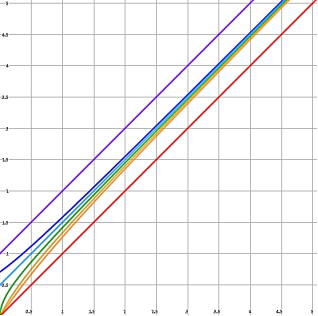
Figure 1 depicts a portion of the graph of
for
(red),
(orange),
(gold),
(green),
(cyan),
(blue),
(purple), for
and
in the range
. The figure reveals that small changes in
have very little effect on
when
is large; but the differences are larger, both in an absolute sense and in a relative sense, for small values of
, such as
.
Figure 1. Divisor functions.
The divisor methods based on power means (which Balinski and Young call “Huntington methods”) proceed as follows. First assign a minimum of
representatives to the
-th state for all
. Second, form the quotients
, for values
satisfying
. Third, identify the
largest values of these quotients; these values correspond to additional representatives for the appropriate states. All of these methods satisfy some version of proportionality, identified by tests in Table 1 of Balinski and Young
.
The commonly known divisor methods, labeled by Huntington as the “five workable methods”, can be identified as follows:
1. : Adams, Smallest Divisors
2. : Dean, Harmonic Mean
3. : Huntington-Hill, Equal Proportions
4. : Webster, Wilcox, Sainte-Laguë, Major Fractions
5. : Jefferson, d’Hondt, Greatest Divisors
For completeness, we mention two other methods discussed by Agnew
, employing the logarithmic mean and the identric mean. These two means lie between the geometric mean and the arithmetic mean, so to some extent they interpolate the space between
and
, even though they do not correspond to power means per se.
As increases, the apportionment method becomes increasingly favorable to large states. The Adams method is the most favorable of all divisor methods to small states; the Jefferson method is the most favorable of all divisor methods to large states. We also note that since (abusing notation) whenever , all the methods involving guarantee at least one representative to every state, no matter how small; and that among these, the Huntington-Hill method is the most favorable to large states. For this reason, proportional representation is probably best-served by employing a method with , such as Webster-Wilcox-Sainte-Laguë.
Mayberry observed
that it is possible to proceed in a dual fashion, apportioning a maximum of
representatives to the
-th state for all
, and then removing representatives corresponding to the
smallest values of the quotients
, for values
satisfying
. We may call these dual Huntington methods.
All these divisor methods and their duals are monotone and proportional in a sense defined by Balinski and Young
. However, they are all capable of breaching quota, including the current Huntington-Hill Equal Proportions method. Balinski’s and Young’s 1974 paper
| [7] | Balinski, Michel L., and Young, H. Peyton, A New Method for Congressional Apportionment. Proc. Natl. Acad. Sci. U.S.A., 71 (1974) pp. 4602-4606.
https://www.jstor.org/stable/64248 |
[7]
included two Census Bureau projections for state populations in 1984, for which Equal Proportions would have breached quota. Lower quota was breached by one apportionment; upper quota was breached by the other apportionment. Had this happened in reality, the ensuing political uproar would almost surely have resulted in an extended legal fight consuming the Congress, the executive and judicial branches, the states, and the general public.
4. A New Apportionment Method
Balinski and Young described an apportionment method
| [7] | Balinski, Michel L., and Young, H. Peyton, A New Method for Congressional Apportionment. Proc. Natl. Acad. Sci. U.S.A., 71 (1974) pp. 4602-4606.
https://www.jstor.org/stable/64248 |
[7]
satisfying quota and monotonicity. It begins at lower quota, and adds representatives using essentially the Jefferson method, subject to upper quota. This method is quite favorable to large states. Mayberry described the dual of this method
, also satisfying quota and monotonicity. It begins at upper quota, and subtracts representatives using essentially the Adams method, subject to lower quota. This method is quite favorable to small states. The bias in these methods makes them unsuitable for use.
Hill’s original proposal appears to have been to begin at lower quota, and then to add representatives using the Equal Proportions method, subject to upper quota. This method too has its dual, beginning at upper quota, and then subtracting representatives using the Equal Proportions method, subject to lower quota. Both Hill’s method and its dual should be considerably less biased than the Balinski and Young method and the Mayberry method. These two methods may be described as quota-capped divisor methods.
We now propose a self-dual method of apportionment that satisfies quota. The apportionment is created all at once, so the consistency postulate of Balinski and Young
| [7] | Balinski, Michel L., and Young, H. Peyton, A New Method for Congressional Apportionment. Proc. Natl. Acad. Sci. U.S.A., 71 (1974) pp. 4602-4606.
https://www.jstor.org/stable/64248 |
[7]
is irrelevant to us. The only preliminary step required is the determination of an appropriate value of
so that the total number of representatives assigned by this method is
, the
house size.
Let the vector of exact quotas be . At the conclusion of this process, the -th state will be assigned either representatives (lower quota) or representatives (upper quota), numbers that differ by no more than one. For Congressional apportionment, we assume that and for all , while for proportional representation, and for all .
Consider the vector for arbitrary values of . We compare corresponding coordinates of the vectors and . Define the tentative apportionment vector as follows: if , then the -th coordinate of is (upper quota); otherwise it is (lower quota). This is the rule that tells us whether to round up or round down the exact quota for the -th state, by comparing the exact quota to the power mean of the floor and the ceiling of the exact quota. In the case where , we have what we might call the naïve Hamilton method; each exact quota is rounded to the closest integer. We could identify a naïve geometric Hamilton method as the case where .
Let , the House size created by the apportionment . As decreases without bound, the power means decrease and we round up all exact quotas (subject to maximum constraints), so . As increases without bound, the power means increase and we round down all exact quotas (subject to minimum constraints), so . is a non-increasing function of . Because of our earlier inequalities, we find that for some value of , . Let . Because is a non-increasing function of , we conclude that is an interval. Our final apportionment is then for any .
This new method is not quite a divisor method; nevertheless, it is proportional in the sense of Balinski and Young
. It does not rank the quotients of the form
for one fixed value of
, and award representatives one at a time based on this priority. Rather, it uses the quotients
, and uses the rule: if greater than one, round up to upper quota, otherwise round down to lower quota; then it adjusts
itself to yield a house size of
.
Using the United States Census Bureau estimated state populations for 2018
, we find that
is the smallest four-place decimal guaranteeing
. This value of
is gratifyingly close to zero, the value used in Equal Proportions; and yet the interval
also includes one, corresponding to the Webster method and the naïve Hamilton method. If
is chosen instead, and indeed even if
, then
. In this data set,
,
, smaller than the exact quota, and
, larger than the exact quota.
This example does not imply that the Huntington-Hill Equal Proportions method would violate quota; the 436
th seat would not be awarded. Our concern is that Equal Proportions might violate quota, and indeed did violate quota severely in the 1984A and 1984B population projections by the Census Bureau from Balinski and Young
| [7] | Balinski, Michel L., and Young, H. Peyton, A New Method for Congressional Apportionment. Proc. Natl. Acad. Sci. U.S.A., 71 (1974) pp. 4602-4606.
https://www.jstor.org/stable/64248 |
[7]
. The present method cannot violate quota, and by using
, gives a result almost perfectly obeying Huntington’s neutral postulate of proportionality, which states that for all
and
, the ratio
should be as close to one as possible. The new method gives the same result as the Hill method and the dual of the Hill method on the 2018 state population estimates, which provides further support for the new method.
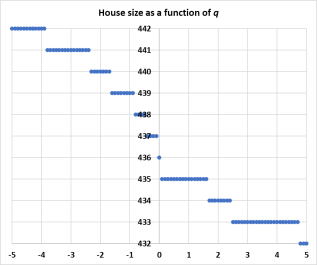
Figure 2 displays House size as a function of
, using the 2018 state population estimates, for
in the range
. For smaller values of
, it is easier for exact quotas to exceed the power means, increasing the number of states whose apportionments are rounded up. For larger values of
, it is harder for exact quotas to exceed the power means, increasing the number of states whose apportionments are rounded down.
Figure 2. House Size as a Function of : 2018 State Population Estimates.
We conjecture that the interval
will usually have non-empty intersection with the interval
, putting the assigned apportionment somewhere between a quota-capped Equal Proportions method and a quota-capped Webster method, hopefully satisfying most observers. The heuristic justification for this conjecture is that the fractional parts of the exact quotas
tend to have a distribution with a small positive skewness. The fractional parts of the exact quota do not in general obey Benford’s law
regarding the first significant digit. However, there are generalizations of Benford’s law
that identify the distributions of the second significant digit, the third significant digit, and so on. These latter distributions all have positive skewness like Benford’s original distribution, but increasingly tending towards uniformity. Thus we expect to see a few more fractional parts less than 0.5 compared to those greater than 0.5, and consequently there will be a need to round up a few more exact quotas in order to achieve
, leading us to values of
slightly less than one.
5. Conclusion
The author very strongly urges Congress to revise the Reapportionment Act of 1929, by adopting the apportionment method proposed in this paper. The resulting apportionment would agree with the current method most of the time, but would prevent the possibility of a political crisis caused by breach of quota, a danger inherent in the present method.
Acknowledgments
The author wishes to thank independent British scholar Peter Mendenhall for ongoing discussions about voting and apportionment; and his wife Yan for her continued support.
Author Contributions
Hal M. Switkay is the sole author. The author read and approved the final manuscript.
Conflicts of Interest
The author declares no conflicts of interest.
References
| [1] |
Mendenhall, Peter Charles, and Switkay, Hal M., Consecutively Halved Positional Voting: A Special Case of Geometric Voting. Social Sciences, 12 (2023) pp. 47-59.
https://www.sciencepg.com/article/10.11648/j.ss.20231202.11
|
| [2] |
Constitution of the United States.
https://constitution.congress.gov/constitution/
|
| [3] |
Balinski, Michel L., and Young, H. Peyton, Fair Representation: Meeting the Ideal of One Man, One Vote. Yale University Press, 1982.
|
| [4] |
Huntington, Edward. V., The Mathematical Theory of the Apportionment of Representatives. Proc. Natl. Acad. Sci. U.S.A., 7 (1921) pp. 123-127.
https://www.pnas.org/doi/abs/10.1073/pnas.7.4.123
|
| [5] |
Huntington, Edward V., A New Method of Apportionment of Representatives. Quart. Pub. Am. Stat. Assoc., 17 (1921) pp. 859-870.
https://www.tandfonline.com/doi/epdf/10.1080/15225445.1921.10503487
|
| [6] |
Huntington, Edward. V., The Apportionment of Representatives in Congress. Trans. Am. Math. Soc., 30 (1928) pp. 85-110.
https://www.ams.org/journals/tran/1928-030-01/S0002-9947-1928-1501423-0/S0002-9947-1928-1501423-0.pdf
|
| [7] |
Balinski, Michel L., and Young, H. Peyton, A New Method for Congressional Apportionment. Proc. Natl. Acad. Sci. U.S.A., 71 (1974) pp. 4602-4606.
https://www.jstor.org/stable/64248
|
| [8] |
Mayberry, J. P., Quota Methods for Congressional Apportionment are Still Non-Unique. Proc. Natl. Acad. Sci. U.S.A., 75 (1978) pp. 3537-3539.
https://www.pnas.org/doi/abs/10.1073/pnas.75.8.3537
|
| [9] |
Birkhoff, Garrett, House Monotone Apportionment Schemes. Proc. Natl. Acad. Sci. U.S.A., 73 (1976) pp. 684-686.
https://www.pnas.org/doi/10.1073/pnas.73.3.684
|
| [10] |
Lang, Serge, Real and Functional Analysis. Springer, 1993.
|
| [11] |
Agnew, R. A., Optimal Congressional Apportionment. The Am. Math. Monthly, 115 (2008) pp. 297-303.
https://www.tandfonline.com/doi/abs/10.1080/00029890.2008.11920530
|
| [12] |
Balinski, Michel L., and Young, H. Peyton, The Webster Method of Apportionment. Proc. Natl. Acad. Sci. U.S.A., 77 (1980) pp. 1-4.
https://www.pnas.org/doi/10.1073/pnas.77.1.1
|
| [13] |
United States Census Bureau, 2018 Population Estimates.
https://factfinder.census.gov/faces/tableservices/jsf/pages/productview.xhtml?pid=PEP_2018_PEPANNRES&src=pt
|
| [14] |
Benford, F., The Law of Anomalous Numbers. Proc. Am. Phil. Soc., 78 (1938) pp. 551-572.
https://www.jstor.org/stable/984802
|
| [15] |
Hill, Theodore P., The Significant-Digit Phenomenon. The Am. Math. Monthly, 102 (1995) pp. 322-327.
https://www.tandfonline.com/doi/abs/10.1080/00029890.1995.11990578
|
Cite This Article
-
-
@article{10.11648/j.ss.20251406.12,
  author = {Hal M. Switkay},
  title = {A Self-dual Pseudo-divisor Quota Method for Congressional Apportionment},
  journal = {Social Sciences},
  volume = {14},
  number = {6},
  pages = {585-590},
  doi = {10.11648/j.ss.20251406.12},
  url = {https://doi.org/10.11648/j.ss.20251406.12},
  eprint = {https://article.sciencepublishinggroup.com/pdf/10.11648.j.ss.20251406.12},
  abstract = {The topic of apportionment is a central focus of study for legislatures around the world, whether the goal is to allocate seats to political parties, or to allocate seats to the member states of a federation. The first goal is sought by parliaments employing proportional representation for parties; the second goal is sought by the United States House of Representatives and the European Parliament. Many of the leading apportionment methods were created in the late 18th century in response to requirements listed in the United States Constitution. No apportionment method perfectly satisfies all desirable properties, particularly the properties of integrality, proportionality, and quota. The Largest Remainder method satisfies quota but suffers from other paradoxes; the divisor methods like the Greatest Divisors, Major Fractions (Arithmetic Mean), Equal Proportions (Geometric Mean), Harmonic Mean, and Smallest Divisor methods satisfy proportionality but may fail quota. Some apportionment methods like Greatest Divisor unfairly favor larger parties and states, and others like Smallest Divisor unfairly favor smaller parties and states. We introduce a new method for Congressional apportionment that creates the apportionment all at once, rather than determining seats one at a time. This method always satisfies quota. It partially resembles the familiar Huntington monotone divisor methods and indeed creates a quota-capped divisor method, but can be compared as well to largest remainder methods.},
 year = {2025}
}
 Copy
|
Copy
|
 Download
-
TY  - JOUR
T1  - A Self-dual Pseudo-divisor Quota Method for Congressional Apportionment
AU  - Hal M. Switkay
Y1  - 2025/12/11
PY  - 2025
N1  - https://doi.org/10.11648/j.ss.20251406.12
DO  - 10.11648/j.ss.20251406.12
T2  - Social Sciences
JF  - Social Sciences
JO  - Social Sciences
SP  - 585
EP  - 590
PB  - Science Publishing Group
SN  - 2326-988X
UR  - https://doi.org/10.11648/j.ss.20251406.12
AB  - The topic of apportionment is a central focus of study for legislatures around the world, whether the goal is to allocate seats to political parties, or to allocate seats to the member states of a federation. The first goal is sought by parliaments employing proportional representation for parties; the second goal is sought by the United States House of Representatives and the European Parliament. Many of the leading apportionment methods were created in the late 18th century in response to requirements listed in the United States Constitution. No apportionment method perfectly satisfies all desirable properties, particularly the properties of integrality, proportionality, and quota. The Largest Remainder method satisfies quota but suffers from other paradoxes; the divisor methods like the Greatest Divisors, Major Fractions (Arithmetic Mean), Equal Proportions (Geometric Mean), Harmonic Mean, and Smallest Divisor methods satisfy proportionality but may fail quota. Some apportionment methods like Greatest Divisor unfairly favor larger parties and states, and others like Smallest Divisor unfairly favor smaller parties and states. We introduce a new method for Congressional apportionment that creates the apportionment all at once, rather than determining seats one at a time. This method always satisfies quota. It partially resembles the familiar Huntington monotone divisor methods and indeed creates a quota-capped divisor method, but can be compared as well to largest remainder methods.
VL  - 14
IS  - 6
ER  -
Copy
|
Download





 Share This Article
 Twitter
 Linked In
 Facebook